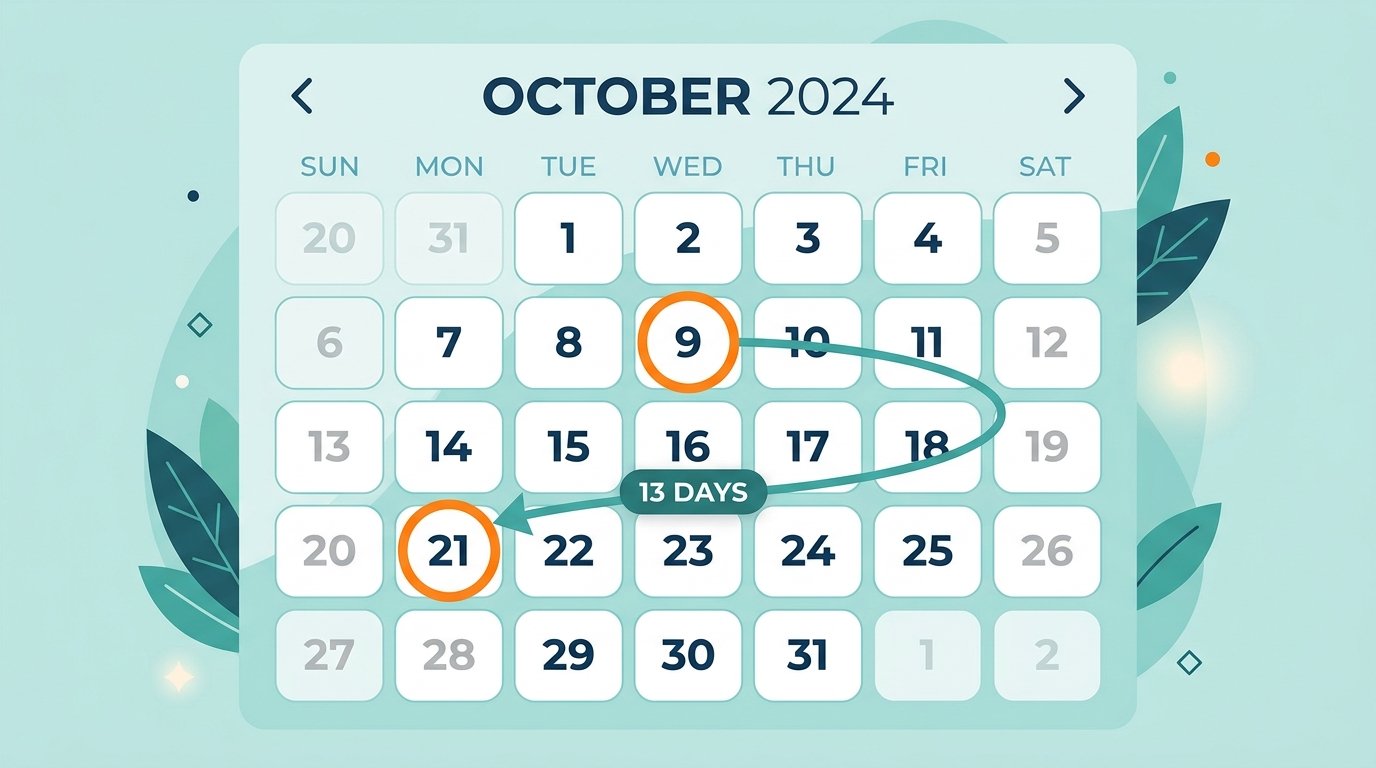
“90 days from now” comes up constantly — probation periods, visa durations, quarterly deadlines, treatment cycles, fitness challenges. It’s one of the most commonly searched date questions, and the answer changes every single day, which is exactly why doing the math manually gets old fast.
How to Calculate a Future Date Manually
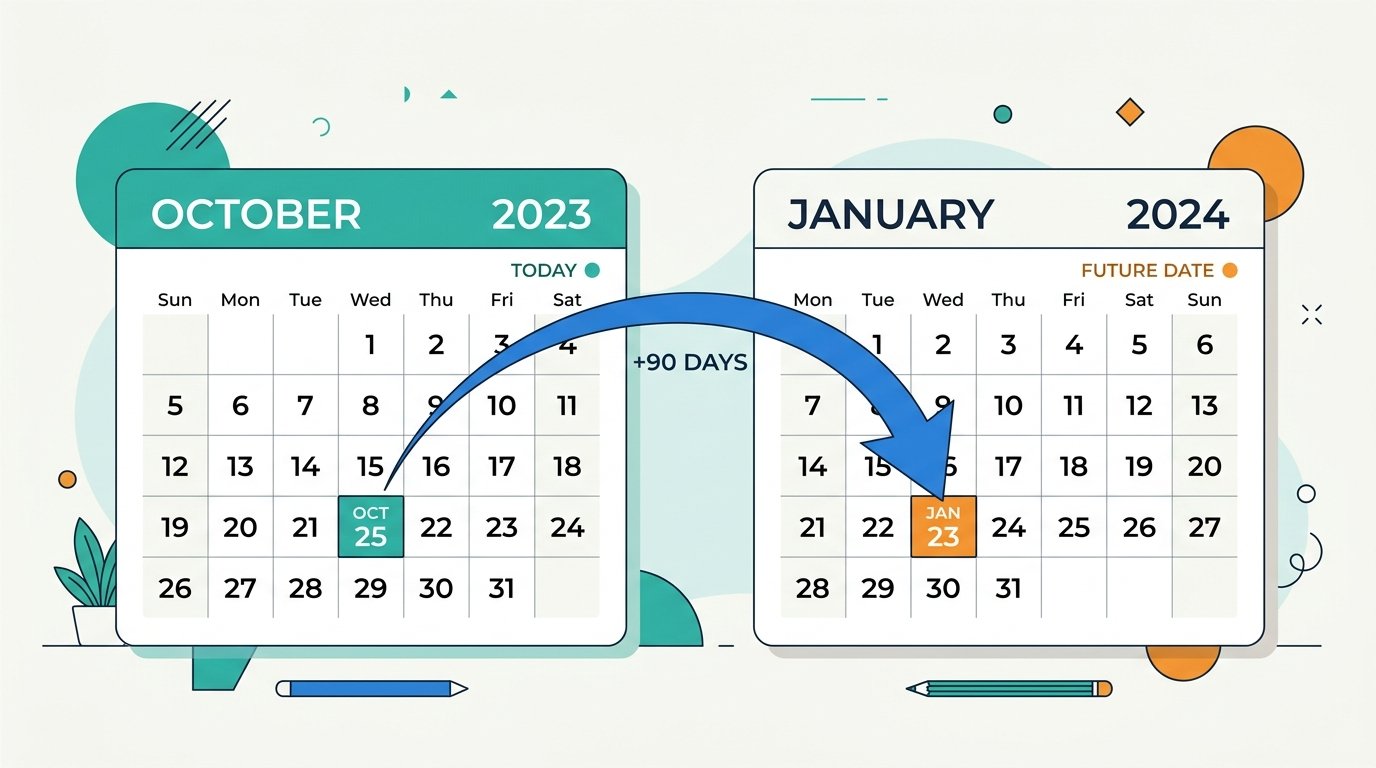
- Start with today’s date.
- Add days within the current month first, up to the end of the month.
- Roll the remainder into the next month, using that month’s actual day count.
- Repeat until the full day count is used up.
- Check for a leap year if the range crosses February.
The counting convention matters too: “90 days from today” typically starts counting from tomorrow, not today itself — so today is day zero, not day one. That single assumption is where a lot of manual date math goes wrong by exactly one day.
90 Calendar Days vs. 90 Business Days
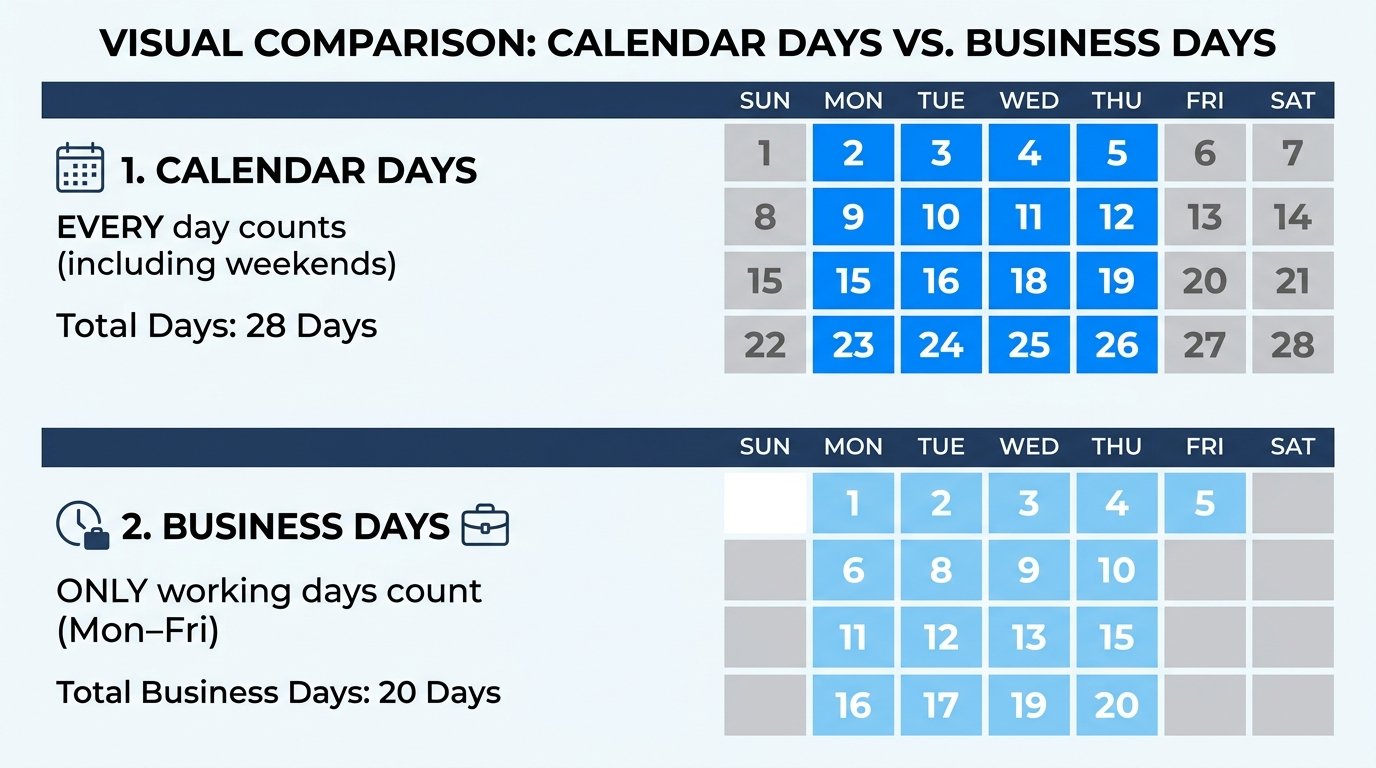
These land on very different dates. 90 calendar days from a given date includes every weekend along the way. 90 business days only counts weekdays, which means you actually need to count well over 120 total calendar days to reach 90 working days — the gap between the two grows the larger the day count.
This distinction matters most in legal and HR contexts: a “90-day notice period” or a “90-day probation” usually means calendar days unless the contract specifically says business days, so it’s worth checking which one applies before assuming.
Common Uses for Future Date Calculations
- Legal filing deadlines and notice periods, often set in exact day counts.
- Visa and immigration durations, where overstaying by even one day matters.
- Medical treatment cycles and follow-up appointments.
- Fitness and habit-building challenges (30/60/90-day programs).
- Quarterly business planning, where 90 days roughly maps to one fiscal quarter.
Try It Yourself
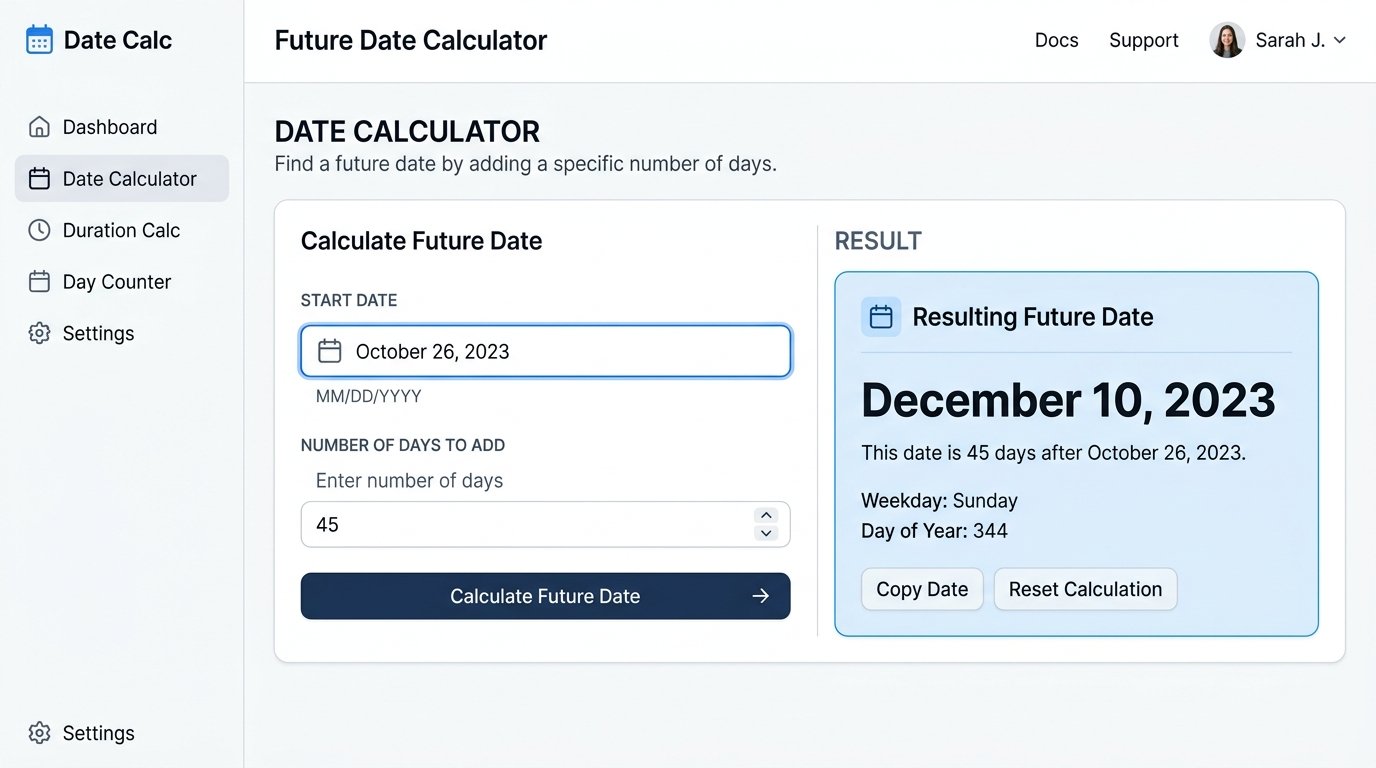
Our Add/Subtract Days tool calculates the exact resulting date instantly — just enter a start date and the number of days, and it handles month rollovers and leap years automatically.
If you need the count in the other direction — the number of days between today and a known future date — use the Days Between Dates calculator. For a business-days-only version, the Working Days Calculator excludes weekends and holidays.