Not every age question comes with a full date of birth attached. Genealogy research, old records, and casual conversations often give you a birth year at best — sometimes just an approximate decade. Here’s how to work with what you have.
If You Know Only the Birth Year
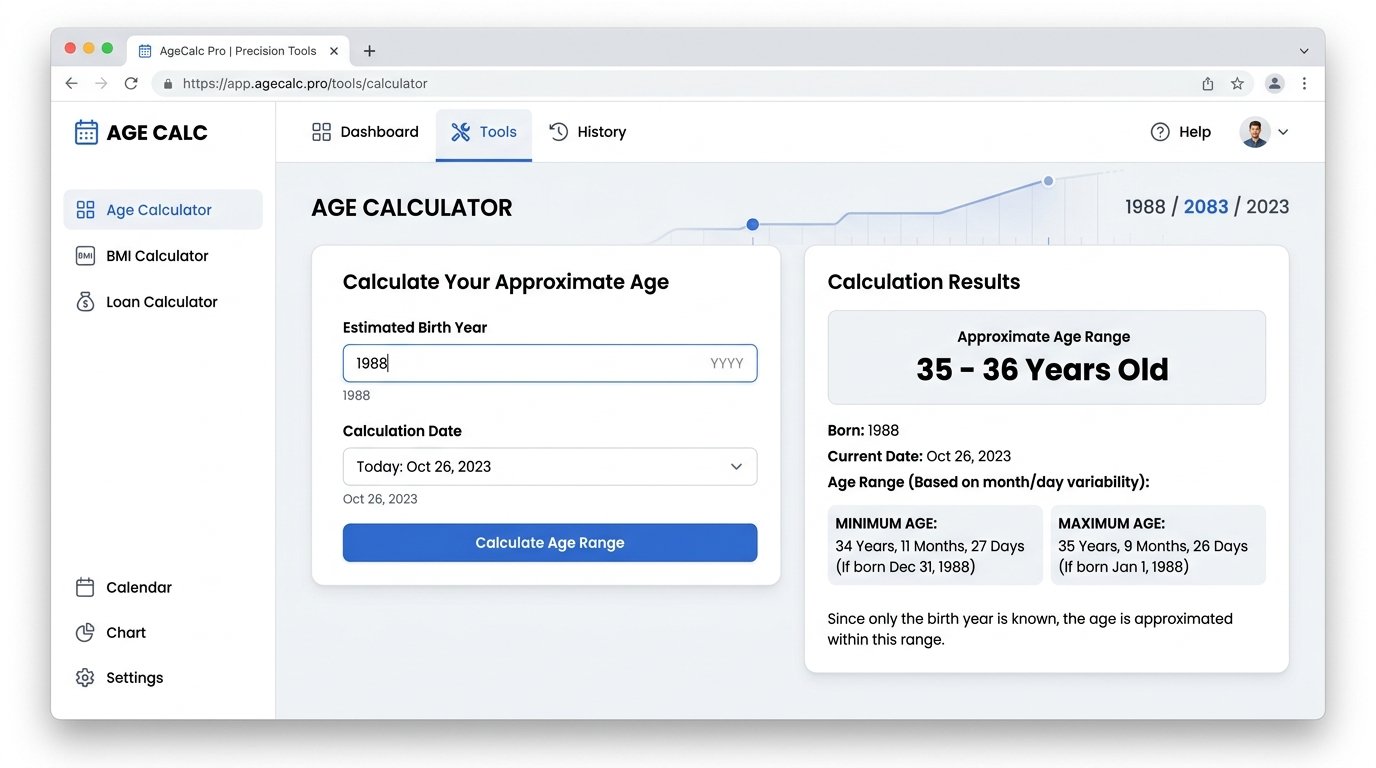
Subtract the birth year from the current year. This gets you within one year of the true age — the person is either that number or one less, depending on whether their birthday has occurred yet this year. For example, someone born in 2007 is 19 as of 2026 if their birthday has passed, or still 18 if it hasn’t.
If You Know an Age at a Past Event
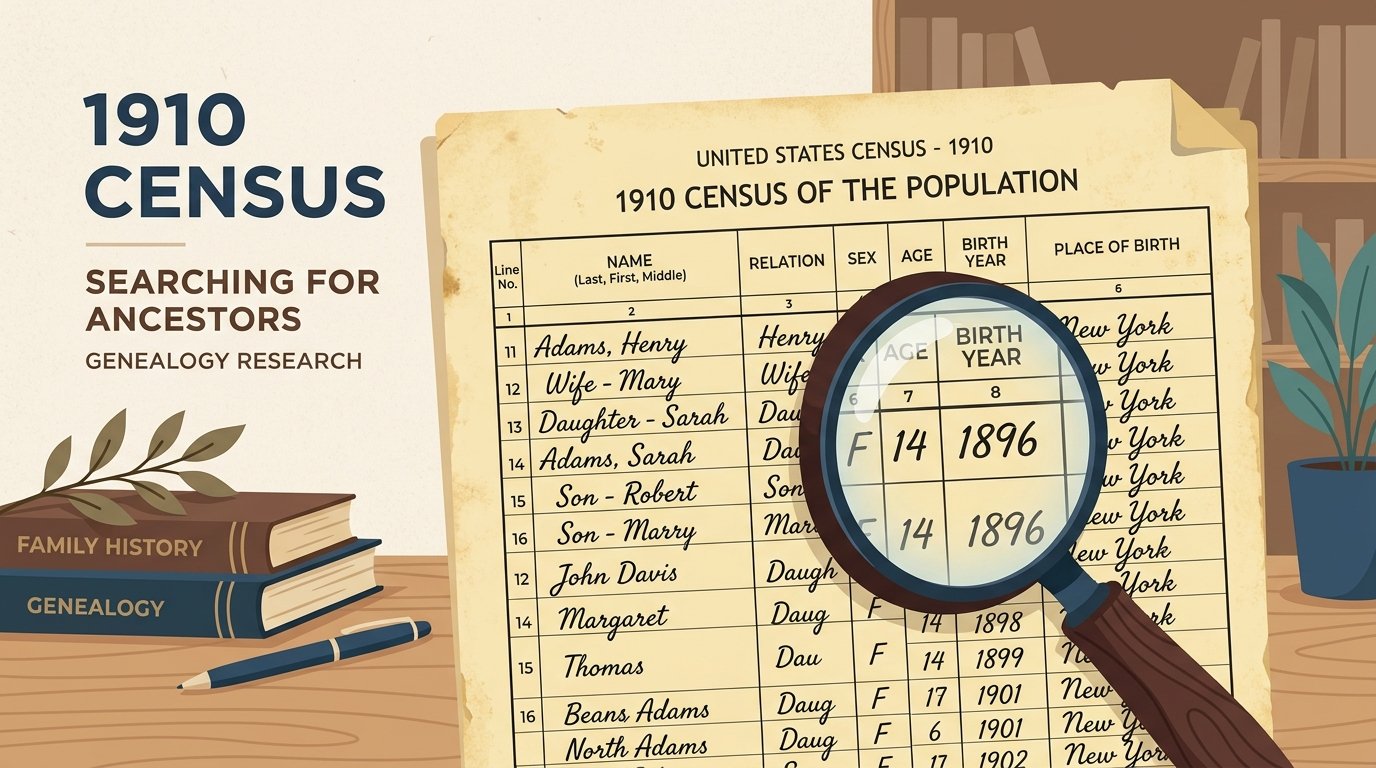
This is common in genealogy work. If a historical record lists someone’s age at a specific point (a census entry, a marriage record, a death record), you can work backward: subtract the listed age from the record’s year to get a birth year estimate — sometimes landing on one of two possible years, depending on whether their birthday had passed by that record date.
If You Only Have Life Milestones
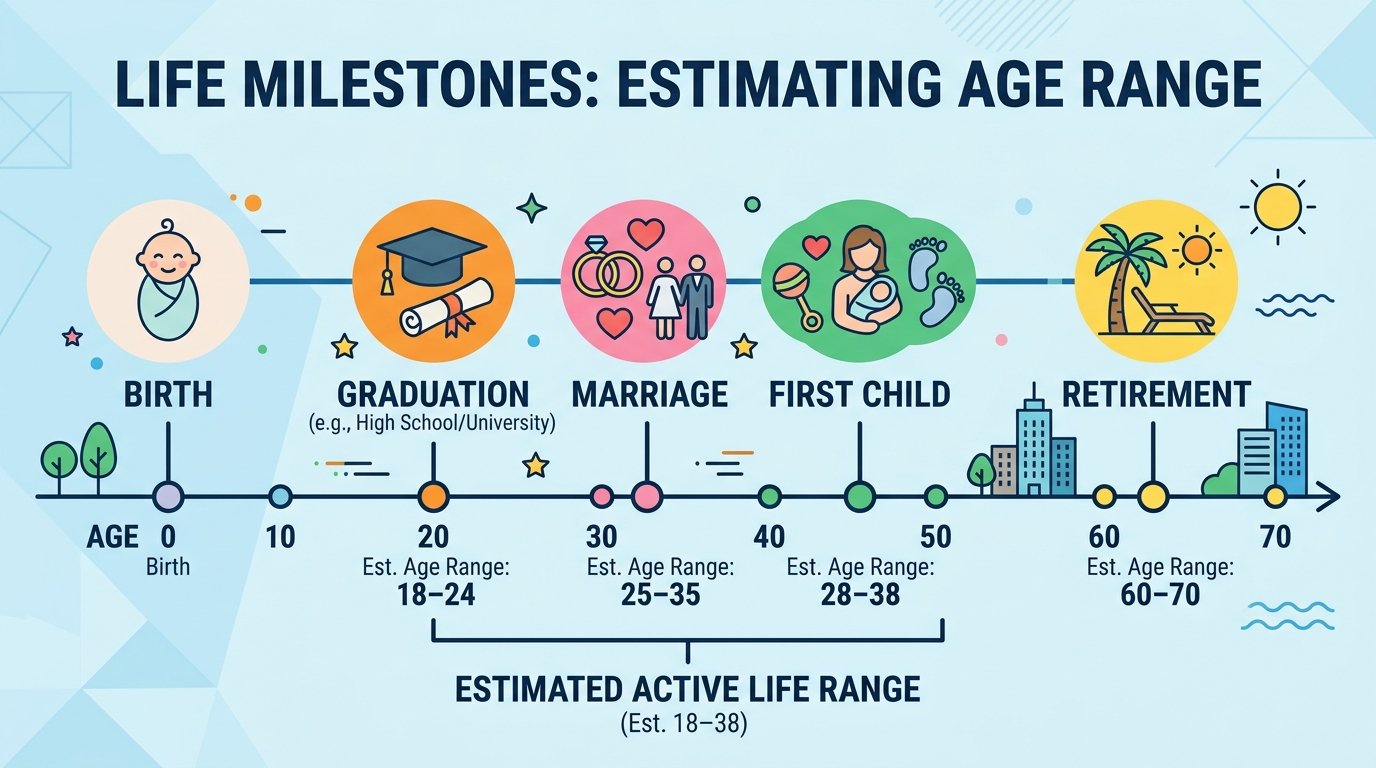
Rough estimates can come from typical patterns — a graduation year suggesting an age range, a marriage record combined with typical marrying-age assumptions, or the birth year of an eldest child suggesting a parent’s approximate age. These are estimates, not exact figures, and get less reliable the further back the assumption chain goes.
The Limits of Estimating
Every method here produces a range, not a certainty — a one-year margin at best when only a birth year is known, wider when working from milestones alone. For anything requiring legal or official accuracy (identity verification, eligibility, legal documentation), an estimate isn’t a substitute for an actual recorded date of birth.
Try It Yourself
Once you have an exact or estimated date of birth, our Age Calculator converts it into an exact age in years, months, and days. If you’re working from a past record instead of today’s date, the calculator can compute age as of any reference date. For measuring the years between two known events instead, the Days Between Dates calculator handles that directly.