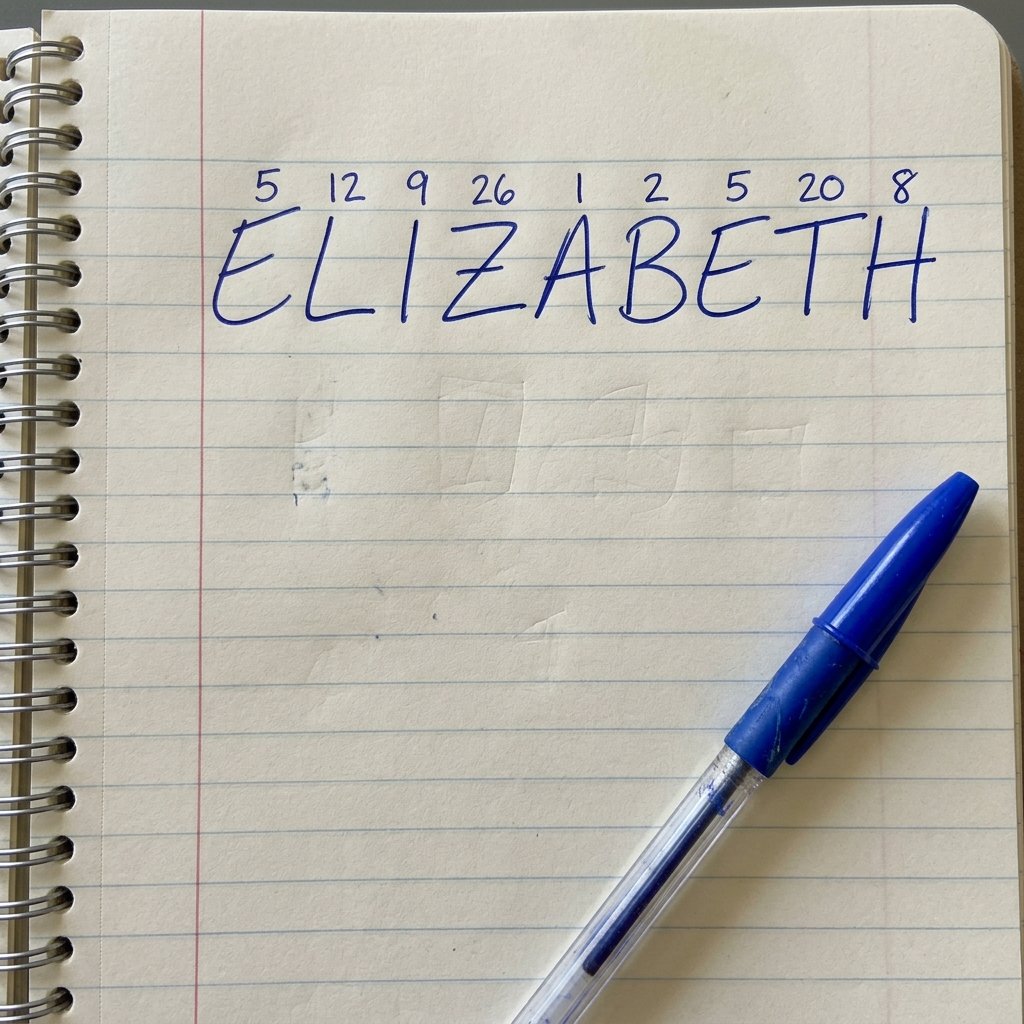
Your name isn’t just what people call you — in numerology, it’s a set of numbers hiding in plain sight. Every letter carries a numeric value, and when you add those values together, you get a name number that’s believed to shape your personality, your first impression on others, and even how well your name “works” for you. A name numerology calculator automates that entire process: type in a name, and within seconds you get your Destiny number, Soul Urge number, and Personality number, decoded and explained.
This guide covers exactly how a name numerology calculator works, the difference between the Pythagorean and Chaldean systems, a full worked example you can follow by hand, what each core number actually means, and how the same logic extends to baby names, business names, and love/compatibility readings. By the end, you’ll be able to calculate your own name number in your head — or just use the calculator and understand exactly what it’s telling you.
What Is a Name Numerology Calculator?
A name numerology calculator is a tool that converts the letters in a name into numbers, adds them up, and reduces the total down to a meaningful number — usually a single digit from 1 to 9, or one of the “Master Numbers” (11, 22, or 33), which are kept unreduced because numerology treats them as carrying extra significance.
The core idea behind name numerology is simple: every letter of the alphabet has a numeric equivalent, so any name — a legal name, a nickname, a business name, even a pet name — mathematically reduces to a number. That number is then interpreted using centuries-old numerological meanings.
Most calculators return more than one number from the same name, because different parts of the name reveal different things:
- Destiny Number (also called the Expression Number) — calculated from every letter in the full name. Describes your natural talents, abilities, and overall life direction.
- Soul Urge Number (also called the Heart’s Desire Number) — calculated only from the vowels in the name. Describes inner desires, motivations, and what you want at your core.
- Personality Number — calculated only from the consonants in the name. Describes how others perceive you — your outer presentation, first impression, and social “front.”
Pythagorean vs. Chaldean Numerology: What’s the Difference?
Almost every name numerology calculator online is built on one of two systems, and they don’t always agree with each other — which is exactly why the same name can return different numbers on different sites.
Pythagorean numerology is the more common Western system. It assigns numbers 1–9 to the alphabet in strict sequential order (A=1, B=2, C=3… I=9, then it restarts at J=1, and so on). It typically uses your full legal birth name for the most accurate reading.
Chaldean numerology is older, believed to have originated in ancient Babylon, and is considered by many numerologists to be the more traditional system. It assigns numbers 1–8 based on the sound and vibration of each letter rather than alphabetical order, deliberately omits the number 9 (considered too sacred/complete to assign to a letter), and traditionally uses the name a person commonly goes by rather than their full legal name.
Neither system is objectively “more correct” — they’re two different traditions with different rules, which is why picking one and staying consistent matters more than which one you choose.
| Feature | Pythagorean | Chaldean |
|---|---|---|
| Numbers used | 1–9 | 1–8 (9 is sacred, not assigned) |
| Letter assignment | Alphabetical sequence | Sound/vibration-based |
| Name typically used | Full legal/birth name | Common/popular name |
| Origin | Ancient Greece (Pythagoras) | Ancient Babylon |
| Best known for | Life Path + name number combos | Traditional, “older” system many Indian numerologists prefer |
How to Calculate Your Name Number (Step by Step)
Here’s the Pythagorean method, worked through by hand, since it’s the version most calculators default to.
Step 1 — Write out the letter values. Each letter of the alphabet maps to a number 1–9: * 1: A, J, S * 2: B, K, T * 3: C, L, U * 4: D, M, V * 5: E, N, W * 6: F, O, X * 7: G, P, Y * 8: H, Q, Z * 9: I, R
Step 2 — Convert every letter of the name to its number. Let’s use “MEERA SHARMA” as a worked example. * M-E-E-R-A = 4-5-5-9-1 * S-H-A-R-M-A = 1-8-1-9-4-1
Step 3 — Add every number together. * 4+5+5+9+1 = 24 * 1+8+1+9+4+1 = 24 * Total = 48
Step 4 — Reduce to a single digit (unless it’s a Master Number). * 48 → 4+8 = 12 → 1+2 = 3
So “Meera Sharma” has a Destiny Number of 3.
For the Soul Urge Number, use only the vowels: * Vowels in MEERA SHARMA: E, E, A, A, A = 5+5+1+1+1 = 13 → 1+3 = 4 * Soul Urge Number = 4
For the Personality Number, use only the consonants: * Consonants: M, R, S, H, R, M = 4+9+1+8+9+4 = 35 → 3+5 = 8 * Personality Number = 8
That’s the entire manual process — a calculator just does these four steps instantly and adds the interpretation.
What Each Core Number Means
Destiny/Expression Number — This is considered the most important number in name numerology because it’s built from every letter in the full name. It’s read as a broad indicator of natural talent, life direction, and the kind of path someone is built to walk.
Soul Urge/Heart’s Desire Number — Built only from vowels, this number is read as a window into internal motivation — what genuinely drives someone versus what they show the world.
Personality Number — Built only from consonants, this number is read as the “outer shell” — first impressions, social energy, and how someone comes across before people get to know them.
Life Path Number (for context) — Not calculated from the name at all, but from the full date of birth. It’s the single number most numerologists consider the most significant in a full chart, and it’s frequently combined with the name numbers for a complete reading — which is why “name and date of birth” calculators exist as a separate, deeper tool.
Master Numbers: Why 11, 22, and 33 Don’t Get Reduced
If, at any point during reduction, the running total lands on 11, 22, or 33, most numerologists stop reducing and keep it as-is. These are called Master Numbers, and they’re treated as carrying amplified significance — 11 tied to intuition and inspiration, 22 to large-scale building and vision, and 33 to nurturing and teaching on a broad scale. A name or date that reduces to a Master Number is generally read as carrying more intensity — both greater potential and greater pressure — than a standard single-digit number.
Business and Brand Name Numerology
The exact same math applies to a business, brand, or product name — the letters are converted, summed, and reduced the same way a person’s name would be. Business owners use it to check whether a proposed name “vibrates” well before registering it, to compare a shortlist of name options, or to see how a brand name pairs numerologically with the founder’s own name number. A few things are worth knowing if you’re evaluating a business name specifically:
- The “common” or “storefront” name is usually the one calculated — not the full legal registered entity name, if the two differ.
- Some numerologists cross-check the business name number against the founder’s Life Path or Destiny number, on the theory that alignment between the two supports smoother growth.
- As with personal names, this is a symbolic framework, not a guarantee — a strong business still depends on product, market, and execution.
Baby Name Numerology
Choosing a name for a new baby is one of the most common reasons people reach for a name numerology calculator. The process is identical — the proposed name is converted to numbers the same way — but it’s typically used differently: instead of analyzing a fixed name, parents test multiple name options side by side to compare which number each one produces, often checking each candidate name against the baby’s date-of-birth-derived Life Path Number for a combined reading. Spelling matters a lot here — two very similar names (say, “Ayaan” vs. “Aayan”) can land on different numbers, which is part of why numerology-based baby-name tools frequently surface alternate spellings alongside the meaning.
Name Correction: Does Changing Your Name Change the Number?
Yes — mathematically, any change to a name’s letters changes its numerology, which is the entire premise behind “name correction” as a numerology practice. Some people add, drop, or adjust a letter (a common example: adding an extra “a” at the end of a name) specifically to shift the calculated number toward one they consider more favorable. Numerologically speaking, the math checks out — a changed spelling produces a different sum and can genuinely land on a different reduced number. What it does not have is scientific backing: there’s no evidence that a numerical shift in a name changes real-world outcomes. Treat it the way most of numerology is best treated — as a framework for reflection and a fun way to explore a decision, not a guaranteed lever for change.
Love and Compatibility Numerology by Name
Name numerology also gets used for relationship compatibility, distinct from a straightforward love calculator by name: instead of comparing letters directly, this approach compares the Destiny, Soul Urge, or Life Path numbers derived from each person’s name (and often birth date) to see how the two numbers interact according to numerology’s compatibility charts. Some number pairings are considered naturally harmonious, others more challenging — though, as with every branch of numerology, this is symbolic interpretation rather than predictive science.
Is Name Numerology Accurate?
Not in a scientific, testable sense — there’s no peer-reviewed research validating that a name’s numeric reduction predicts personality traits, career success, or life outcomes. What numerology consistently offers, and has for thousands of years across multiple cultures, is a structured framework for self-reflection. People who use it often report it helps them notice patterns, think through decisions, or simply enjoy a symbolic lens on their own life — that’s a legitimate use case even without scientific validation, as long as it’s approached as reflection rather than fact.
Advantages of Using a Name Numerology Calculator
- Instant results — no manual letter-by-letter math required.
- Multiple numbers from one input — Destiny, Soul Urge, and Personality all calculated together.
- Useful across contexts — personal names, baby names, business names, and compatibility all use the same underlying method.
- No sensitive data required — a name-only calculation doesn’t need a birth date, though richer tools optionally combine both.
- Genuinely reflective for many users — even without scientific backing, plenty of people find real value in the self-reflection it prompts.
Disadvantages and Common Mistakes
- System inconsistency — Pythagorean and Chaldean will often produce different numbers from the same name, which confuses people who don’t realize two systems exist.
- Spelling sensitivity — nicknames, middle names, and alternate spellings all shift the result, so comparing your number to a friend’s requires using the same naming convention.
- Overreliance on one number — a full numerology reading combines name numbers with the Life Path number from the birth date; treating the name number alone as the complete picture misses most of the framework.
- Confusing correction with correction of outcomes — changing a name’s spelling changes its number, but it doesn’t retroactively “fix” unrelated life events; that’s a common overreach in how name correction gets marketed.
- Skipping the vowel/consonant distinction — a lot of people calculate only the Destiny Number and never realize the Soul Urge and Personality numbers come from a completely different subset of letters.
Name Numerology Calculator vs. Other Numerology Tools
| Tool | Input | What It Calculates | Best For |
|---|---|---|---|
| Name numerology calculator | Name only | Destiny, Soul Urge, Personality | Quick read on any name — personal, baby, or business |
| Name + date of birth calculator | Name and birth date | All of the above plus Life Path, Birthday Number | Full personal numerology chart |
| Life Path calculator | Birth date only | Life Path Number | Understanding your core life direction without a name component |
| Business name numerology calculator | Business/brand name | Same method as personal Destiny Number | Naming or renaming a business or product |
| Love/name compatibility calculator | Two names (sometimes + birth dates) | Compatibility between two Destiny/Soul Urge numbers | Relationship-focused numerology reading |
Real-World Example: Comparing Two Systems
Take the name “Arjun.” Under Pythagorean numerology: A(1)+R(9)+J(1)+U(3)+N(5) = 19 → 1+9 = 10 → 1+0 = 1. Destiny Number = 1.
Under Chaldean numerology, the same letters carry different values (Chaldean uses a sound-based, non-sequential chart, and doesn’t assign 9 to any letter), so the total — and the resulting reduced number — can come out differently. This is exactly why two “accurate” calculators can disagree: they’re not measuring the same thing, even though they’re using the same name.
Conclusion
A name numerology calculator takes something that looks purely symbolic — the letters in a name — and runs it through a consistent mathematical process to produce a Destiny, Soul Urge, and Personality number. Whether you’re testing your own name, weighing baby name options, checking a business name before you commit to it, or just curious what your name adds up to, the process is the same four steps: convert, sum, reduce, interpret. Try both the Pythagorean and Chaldean systems on your own name and compare — then decide which framework feels like it fits, and use it as a starting point for reflection rather than a verdict. For another fun name-based calculation, you can also check out the FLAMES calculator.