You don’t need an app to find your numerology number — though it definitely speeds things up. Here’s exactly how the calculation works, step by step, so you understand what’s happening behind the result.
Step 1: Choose your system. The two most common are Pythagorean numerology (based on the Latin alphabet, widely used in the West) and Chaldean numerology (an older system some consider more accurate but more complex). Most online tools default to Pythagorean.
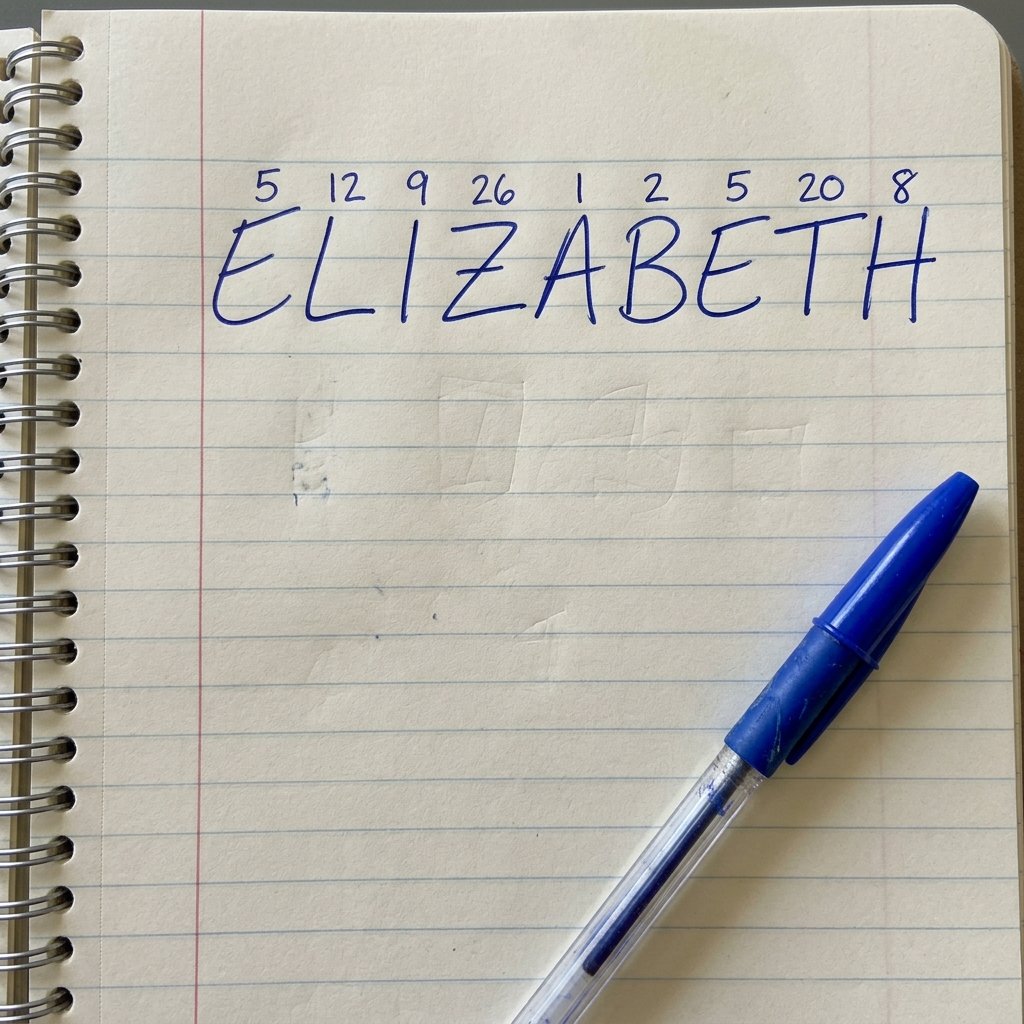
Step 2: Assign each letter a number.
In the Pythagorean system: A, J, S = 1; B, K, T = 2; C, L, U = 3; D, M, V = 4; E, N, W = 5; F, O, X = 6; G, P, Y = 7; H, Q, Z = 8; I, R = 9.
Step 3: Add up your full name.
Write out your full birth name, convert every letter to its number, and add them all together.
Step 4: Reduce to a single digit.
Keep adding the digits of your total together until you land on one number between 1–9 (for example, 47 becomes 4+7=11, then 1+1=2). If you land on 11, 22, or 33 along the way, some numerologists stop there — these are considered “master numbers” with amplified meaning.
A worked example:
“Maya” → M(4) + A(1) + Y(7) + A(1) = 13 → 1+3 = 4 (discipline, stability, structure)
Three separate numbers worth knowing:
- Expression Number — your full birth name, showing your natural talents
- Soul Urge Number — calculated from just the vowels, revealing inner desires
- Personality Number — calculated from just the consonants, showing how others see you
Common mistakes. Using a nickname instead of your full birth name, forgetting to reduce master numbers correctly, or mixing Pythagorean and Chaldean letter values in the same calculation.
Skip the manual math: you can also use marriage prediction by numerology or test your bond with our Love Calculator.